

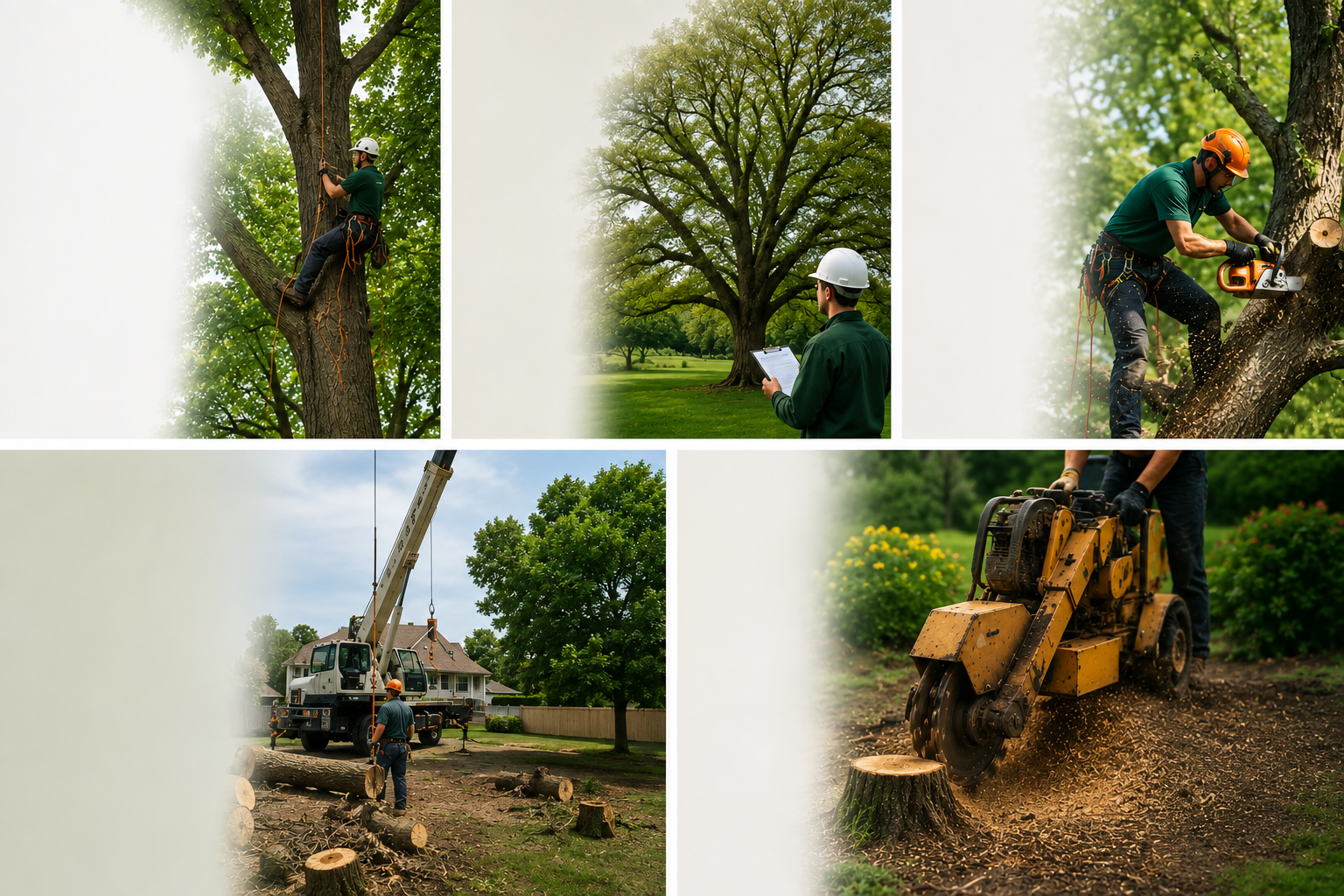
Trees bring shade, character, privacy, and natural beauty to outdoor spaces. However, keeping mature trees healthy requires more than occasional watering or removing a few visible branches. An arborist understands tree structure, growth patterns, common health problems, and potential safety concerns. With informed tree care, property owners can make better decisions before minor issues develop into serious hazards.
Understanding what professional tree care involves also makes it easier to recognize warning signs and determine when expert attention may be appropriate.
What Does an Arborist Do?
An arborist focuses on the health, condition, structure, and management of trees. Rather than looking only at visible branches, an arborist evaluates the entire tree, including the trunk, canopy, roots, surrounding soil, and growing environment.
This broader perspective matters because tree problems often have more than one cause. Sparse foliage, for example, may result from root disturbance, soil conditions, disease, environmental stress, or structural damage.
Evaluating Overall Tree Condition
A detailed assessment usually begins with visible signs of health and stability. An arborist may examine leaf density, branch development, bark condition, cavities, cracks, deadwood, unusual growth, and changes in the surrounding ground.
The location of a tree is equally important. Trees growing close to buildings, driveways, walkways, utility areas, or heavily used spaces may require additional attention because falling limbs or structural failure can create greater risks.
Why Tree Structure Matters
Healthy appearance does not always mean strong structure. Some trees develop weak branch unions, multiple competing stems, unbalanced crowns, or heavy limbs that place excessive stress on certain areas.
An arborist can identify these characteristics and consider how they may affect the tree over time. Early recognition can help property owners make informed decisions about pruning, monitoring, or other appropriate care.
Detecting Problems Before They Become Obvious
Many serious tree issues begin quietly. Small cracks may expand, decay may develop inside a trunk, and roots can become damaged without immediately changing the appearance of the canopy.
Regular observation helps catch subtle warning signs. Property owners seeking professional tree care in the local area can use expert assessments to better understand which trees need attention and which remain in stable condition.
How an Arborist Supports Long-Term Tree Health
Tree care should consider future growth rather than focusing only on immediate appearance. Removing branches without understanding tree biology can affect balance, expose vulnerable tissue, or encourage undesirable new growth.
An arborist considers how each recommendation may influence the tree months or years later. This long-term approach is particularly valuable for young trees because early structural decisions can shape their development for decades.
Proper Pruning Decisions
Not every branch needs to be removed. Effective pruning generally targets specific concerns, such as dead, damaged, crossing, poorly positioned, or structurally weak branches.
Timing also matters. Different tree species respond differently to pruning depending on their growth cycle and condition. An arborist can determine when intervention is useful and when leaving the tree undisturbed may be the better option.
Recognizing Common Warning Signs
Property owners can support tree health by paying attention to visible changes. A tree may need closer evaluation when branches suddenly die, leaves become unusually sparse, cracks appear in major limbs, fungi develop near the trunk, or the tree begins leaning differently.
Changes around the root zone deserve attention as well. Construction activity, soil compaction, excavation, drainage changes, and repeated vehicle traffic can interfere with root health.
After Severe Weather
Storms can expose structural weaknesses that were previously difficult to notice. Strong winds and heavy rain may break branches, split unions, disturb roots, or change the balance of a tree.
An arborist can evaluate storm-affected trees and determine whether damaged areas require attention. Even when a tree remains standing, hidden structural problems may still exist.
Making Better Tree Care Decisions
Good tree management starts with observation and informed planning. Instead of reacting only when a branch falls or a tree visibly declines, property owners can monitor changes throughout the year.
Keeping the area around trees protected from unnecessary soil disturbance can also support long-term health. Adequate growing space, thoughtful pruning, and timely assessments all contribute to stronger landscapes.
Conclusion
Trees are living structures that continuously respond to weather, soil conditions, surrounding development, and natural aging. Understanding those changes is essential for maintaining a safe and attractive property.
Working with an arborist can provide valuable insight into tree health, structural concerns, pruning needs, and long-term management. With careful observation and knowledgeable guidance, property owners can protect healthy trees, address developing problems earlier, and create outdoor spaces that r