

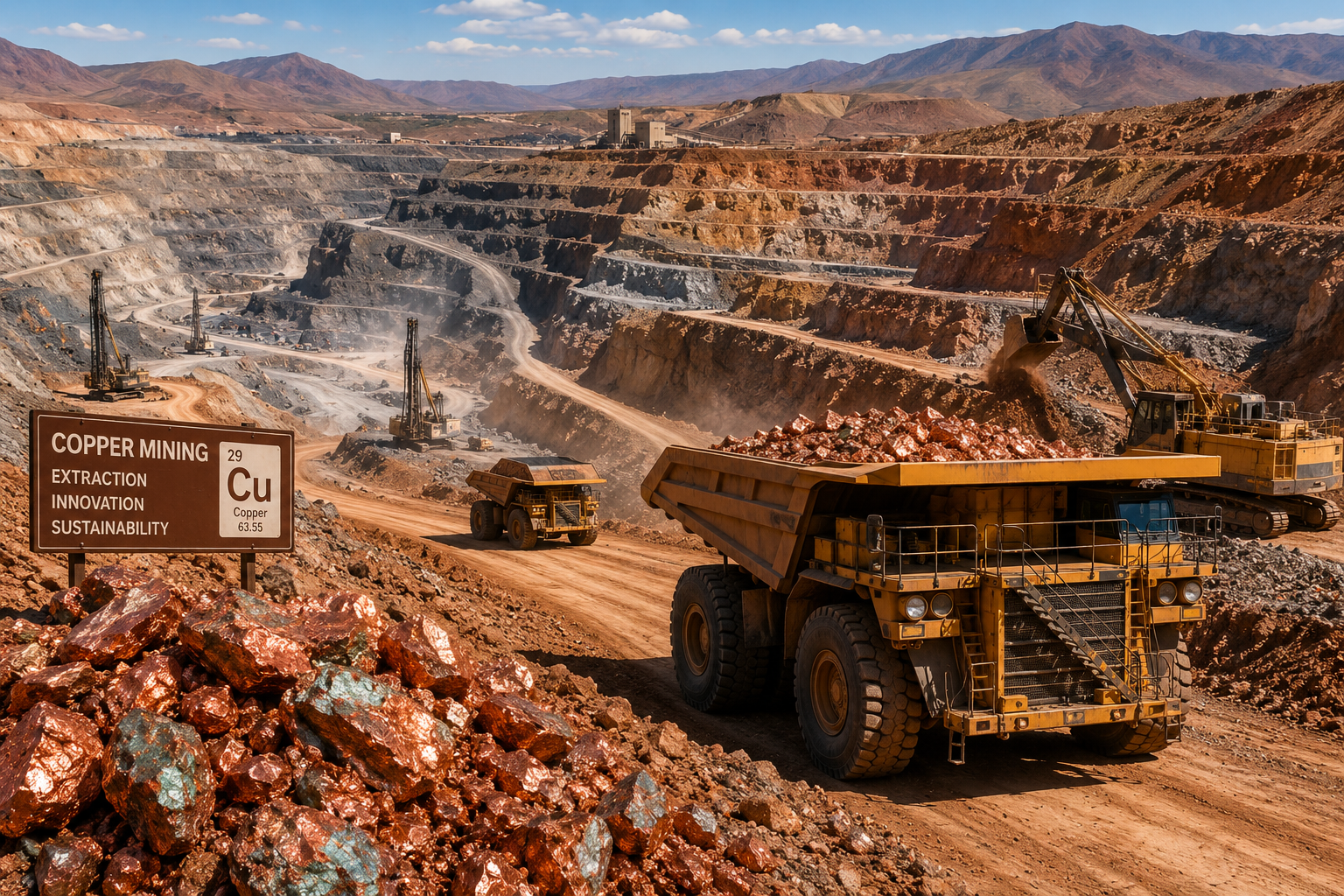
Copper Mining has played an important role in shaping communities, supporting industrial development, and supplying a versatile natural resource used throughout modern society. From electrical infrastructure to transportation and construction, copper remains valuable because of its conductivity, durability, and recyclability. Understanding how copper is located, extracted, and managed helps explain why responsible mineral development continues to attract attention in regions with significant geological resources.
Why Copper Mining Remains Important
Modern life relies heavily on materials that conduct electricity efficiently and perform reliably over long periods. Copper meets these requirements exceptionally well. As electrical systems expand and infrastructure evolves, demand for dependable mineral resources continues to influence development decisions.
Copper Mining contributes raw material used in wiring, electrical equipment, building systems, transportation components, and industrial machinery. Its importance extends beyond extraction itself because mining activity can also support engineering, environmental science, logistics, construction, and skilled trades.
Communities near mineral deposits often examine proposed development from several perspectives. Employment, land use, environmental protection, infrastructure, and long-term economic activity all become part of the discussion. As a result, modern Copper Mining involves much more than simply removing mineral-bearing rock from the ground.
How Copper Deposits Are Identified
Before extraction can begin, specialists must understand the geology of a potential mineral deposit. Exploration teams study rock formations, historical geological information, and samples collected from targeted areas.
Geological Exploration and Testing
Exploration may include geological mapping, drilling, sampling, and laboratory analysis. These methods help specialists determine the location, depth, size, and characteristics of mineralized zones.
The information gathered during exploration allows engineers and geologists to evaluate whether Copper Mining could be technically practical. Detailed studies are essential because underground conditions can vary significantly even within the same geological region.
Planning also considers access, water management, rock characteristics, infrastructure requirements, and environmental conditions. These factors influence how a potential mine may eventually be designed.
The Copper Mining Process
Once a mineral resource has been carefully evaluated and the necessary planning and approvals are addressed, development can move through several stages. The specific approach depends on the location and geometry of the deposit.
Copper Mining may use underground methods when valuable mineralization lies beneath substantial layers of rock. Underground operations require carefully designed access routes, ventilation systems, ground support, equipment areas, and material-handling systems.
After mineral-bearing rock is extracted, it generally undergoes processing designed to separate valuable copper minerals from surrounding material. Crushing and grinding reduce the rock to smaller particles, allowing physical processing methods to concentrate the desired minerals.
Managing Materials Responsibly
Material management is a major consideration throughout Copper Mining. Operators must plan for waste rock, processed materials, water, and other site-related resources.
Water management can involve collection systems, treatment processes, monitoring programs, and carefully engineered storage facilities. Modern Copper Mining planning also considers how disturbed land will be stabilized and reclaimed over time.
Environmental Planning and Monitoring
Environmental considerations begin well before active extraction. Baseline studies can document existing water resources, wildlife habitats, vegetation, wetlands, and other environmental characteristics.
This information provides a reference point for evaluating potential changes and developing management strategies. Monitoring may continue during construction, operation, closure, and post-closure periods.
Copper Mining projects can require extensive planning to reduce environmental impacts while maintaining safe and efficient operations. Engineering controls, water-management systems, monitoring programs, and reclamation strategies all contribute to responsible resource development.
Economic and Community Considerations
Mining activity can create opportunities for workers with a wide range of skills. Geologists, engineers, equipment operators, electricians, mechanics, environmental specialists, construction workers, and administrative professionals may all contribute to a project.
Copper Mining can also create indirect economic activity through transportation, maintenance, supplies, professional services, and other supporting industries. However, communities often want to understand both potential benefits and long-term responsibilities before development proceeds.
Building Long-Term Regional Value
A thoughtful approach considers what happens throughout the entire mine life cycle. Planning for closure, reclamation, workforce transitions, and long-term environmental monitoring can be just as important as planning initial construction.
Responsible Copper Mining therefore requires cooperation among technical specialists, regulators, workers, communities, and other stakeholders. Clear communication can help people better understand proposed activities, environmental safeguards, and regional implications.
The Future of Copper Mining
Copper continues to be an important material for electrical networks, buildings, transportation systems, industrial equipment, and emerging infrastructure. This broad usefulness keeps attention focused on regions containing economically significant deposits.
At the same time, expectations surrounding Copper Mining continue to evolve. Environmental management, worker safety, efficient resource use, transparent planning, and reclamation are increasingly central to how mineral projects are evaluated.
Conclusion
Copper Mining connects natural geology with modern infrastructure, skilled employment, engineering, and long-term resource planning. From exploration and underground development to mineral processing, environmental monitoring, and eventual reclamation, every stage requires careful technical decisions. As copper remains essential to electrical and industrial applications, understanding how mining works helps communities and stakeholders participate more meaningfully in discussions about responsible mineral development and its potential regional impact.
 john
john