

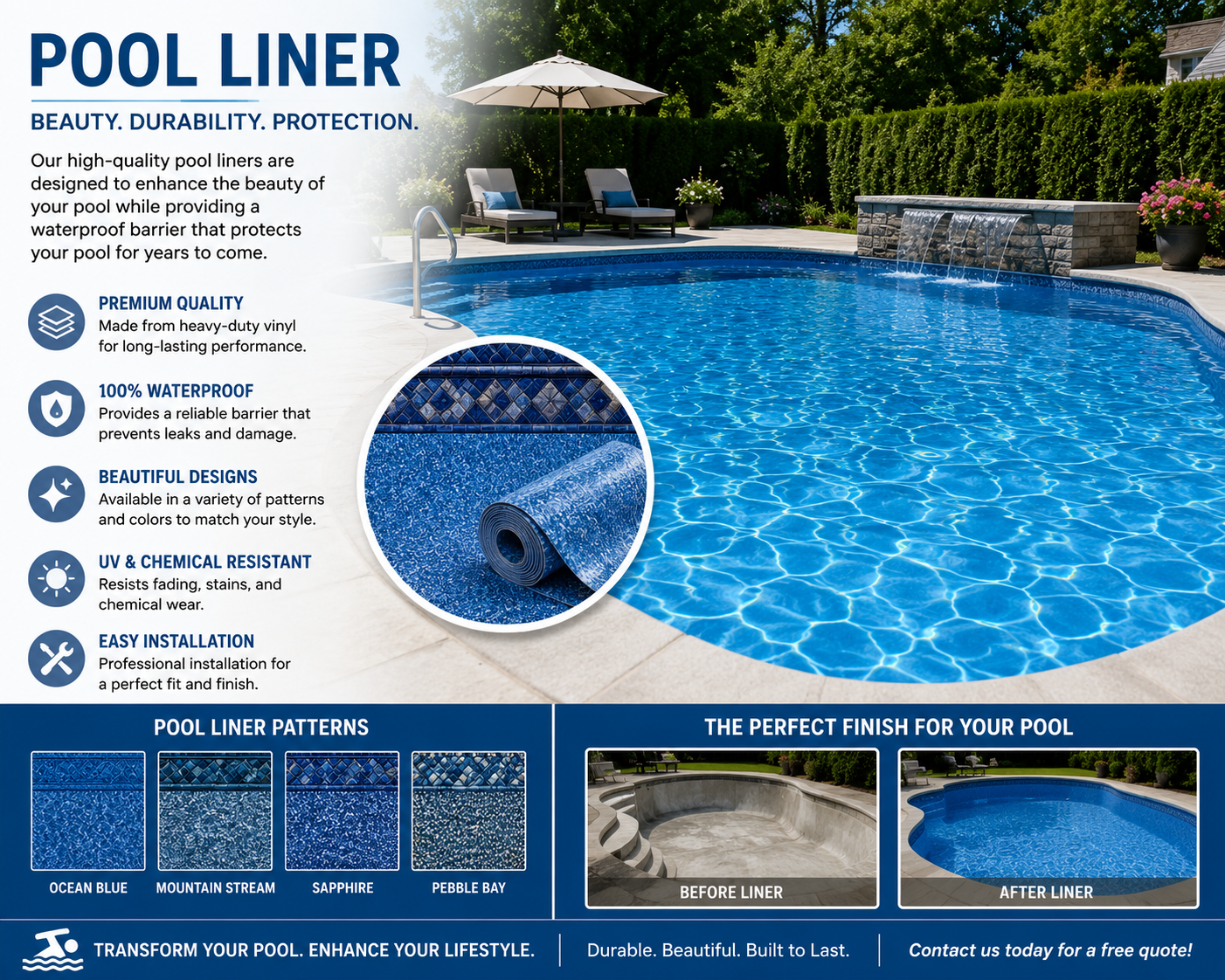
A pool liner has an important job. Beyond giving a swimming pool a clean, finished appearance, it creates a watertight barrier and protects the underlying pool structure. When a liner becomes worn, damaged, or excessively faded, installing a new one can refresh the entire swimming area.
Successful pool liner installation involves much more than placing new material inside the pool. Accurate measurements, careful surface preparation, proper positioning, and controlled filling all contribute to a smooth and dependable result.
Understanding how the installation process works can help homeowners recognize why attention to detail matters at every stage.
Why Proper Pool Liner Installation Matters
A liner needs to fit the pool closely and evenly. Poor installation can lead to wrinkles, stretching, loose areas, premature wear, or difficulties around steps and fittings.
A properly installed liner, on the other hand, provides a smooth finish and helps protect the pool’s underlying surfaces.
Installation quality is particularly important because liners are constantly exposed to water pressure, chemicals, sunlight, and changing temperatures. Small installation problems can become more noticeable as the liner ages.
What Happens Before Installation?
Preparation is one of the most important parts of the process. Installing a new liner over an unsuitable surface can compromise the final result.
Accurate Pool Measurements
The pool must be measured carefully before the liner is prepared. Length and width are only part of the equation.
Measurements may also need to account for:
- Shallow and deep-end depths
- Floor slopes
- Steps and benches
- Corners and curves
- Wall dimensions
- Unusual pool shapes
Precise measurements help ensure that the liner conforms properly to the pool once positioned and filled.
Removing the Existing Liner
If an old liner is present, it must be removed so the underlying surfaces can be inspected.
This stage provides an opportunity to identify problems that may have been concealed. Rough areas, cracks, moisture concerns, deterioration, or damaged components should be addressed before the new liner goes into place.
Preparing the Pool Surface
A clean, smooth base is essential for a successful installation.
Debris, sharp objects, and uneven areas can affect how the liner sits and may eventually cause damage. The walls and floor should therefore receive careful attention before installation continues.
For homeowners who are uncertain about their pool’s condition, consulting an experienced pool installation professional can help identify preparation issues that might otherwise be overlooked.
How Is a New Pool Liner Installed?
Once measurements and preparation are complete, the liner can be positioned.
Positioning the Liner
The liner is carefully placed so it aligns correctly with the pool’s shape. Installers pay particular attention to corners, slopes, steps, and other structural features.
At this stage, accurate positioning is critical because incorrect alignment can create uneven tension later.
Removing Wrinkles and Air
Air trapped between the liner and pool surface needs to be removed so the material sits tightly against the walls and floor.
Wrinkles should also be addressed before substantial amounts of water enter the pool. Once water pressure increases, correcting positioning issues can become more difficult.
Filling the Pool
Water is generally introduced gradually while the liner is monitored.
As the water level rises, pressure helps hold the liner against the pool surface. Installers can check alignment and ensure the material continues to settle properly throughout this stage.
Common Pool Liner Installation Mistakes
Several seemingly minor mistakes can affect liner performance.
Incorrect measurements can result in excessive stretching or loose material. Inadequate surface preparation may leave imperfections underneath the liner, while rushed positioning can create wrinkles or alignment problems.
Another common concern is cutting openings for fittings too early. Returns, drains, lights, and other openings need careful handling because errors can compromise the liner’s watertight barrier.
How to Protect a Newly Installed Pool Liner
Installation is only the beginning. Good maintenance can help preserve the liner’s appearance and condition.
Maintain Balanced Water Chemistry
Improper chemical levels can contribute to fading, brittleness, and deterioration. Regular testing helps maintain a pool environment that is safer for both swimmers and liner materials.
Avoid Sharp Objects
Tools, toys with rough edges, and other sharp items should be kept away from liner surfaces. Even a small puncture can create an unwanted leak.
Watch the Water Level
Unexpected water loss deserves attention. Although evaporation is normal, consistently dropping water levels may indicate a leak that requires investigation.
When Is It Time for a New Liner?
Visible damage is not the only reason homeowners consider installation.
A liner may become increasingly faded, brittle, stretched, or wrinkled with age. Persistent leaks and deterioration around fittings can also indicate that the existing liner is approaching the end of its useful life.
Addressing these signs early may prevent water from reaching areas behind the liner and creating additional problems.
Conclusion
Quality pool liner installation depends on a series of carefully completed steps. Precise measurements establish the correct fit, thorough preparation creates a suitable foundation, and careful positioning helps the liner settle smoothly against the pool.
Once installed, balanced water chemistry, routine inspections, and responsible pool use can help protect the liner from unnecessary wear.
For homeowners planning a liner update, focusing on preparation and installation quality rather than simply appearance can make a meaningful difference. A correctly fitted liner not only refreshes the swimming pool but also provides the protective barrier needed to keep it functional and enjoyable for years
 john
john