

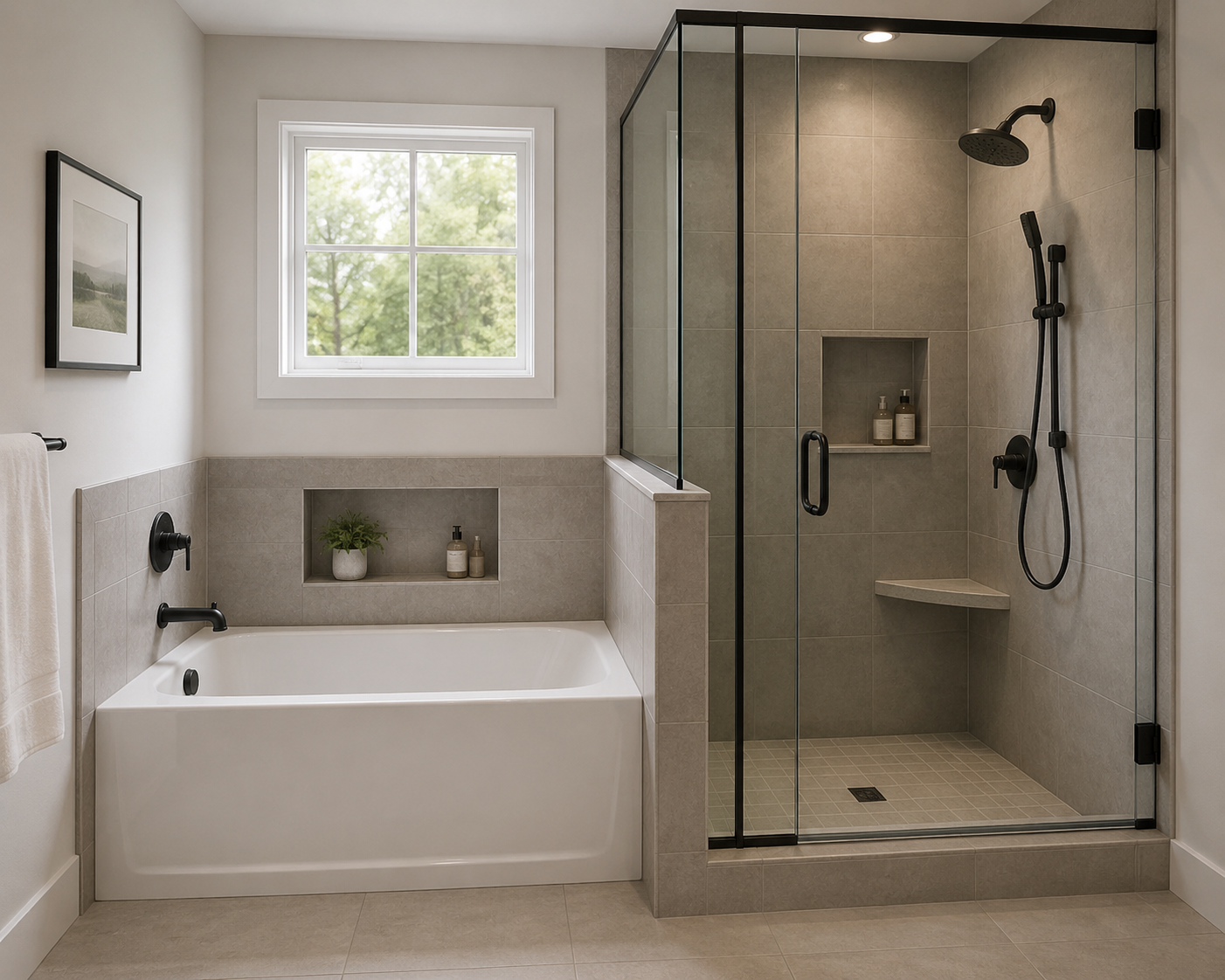
Bathrooms should be comfortable, functional, and easy to use every day. However, an older bathtub can sometimes make the space feel cramped or inconvenient, especially when stepping over a high tub wall becomes difficult. A bathtub to shower conversion can transform an outdated bathing area into a practical walk-in shower while giving the bathroom a cleaner, more modern appearance.
For homeowners thinking about improving accessibility or simply making better use of their bathroom, this renovation can provide meaningful benefits without requiring a complete change to the room’s layout.
Why Convert a Bathtub Into a Shower?
Many bathrooms were originally designed with bathtubs because they were considered a standard feature. Yet lifestyles and household needs change. People who rarely take baths may find that a tub occupies valuable space without providing much everyday value.
A bathtub to shower conversion replaces the existing tub area with a shower designed around convenience. Depending on the bathroom, the new layout may offer a wider entrance, more usable standing space, and easier access.
The change can also make the room appear more open. Removing the visual bulk of a traditional bathtub often creates cleaner sightlines, especially when the shower design uses transparent or minimal barriers.
Improved Accessibility for Everyday Use
One of the most common reasons homeowners consider a bathtub to shower conversion is easier access. Entering a traditional bathtub requires stepping over a raised edge, which may become inconvenient for older adults or anyone with limited mobility.
A More Convenient Entry
A shower can be designed with a lower entry point, reducing the effort required to get into the bathing area. This seemingly simple change can significantly improve daily convenience.
Other practical features may include strategically positioned grab bars, built-in seating, handheld shower fixtures, and slip-resistant flooring. These additions can make the shower more comfortable for different members of the household.
Homeowners researching local bathroom renovation options can also consider how accessibility improvements may support both present and future needs.
Making Better Use of Bathroom Space
Bathrooms are often among the smallest rooms in a home, so every square foot matters. A bathtub to shower conversion can help the bathing area feel less restrictive without necessarily changing plumbing locations or expanding the room.
Creating a More Open Appearance
A well-planned shower can visually simplify the bathroom. Glass panels, streamlined fixtures, large-format wall surfaces, and uncluttered storage can contribute to a spacious appearance.
The shower itself can also be planned around available dimensions. Recessed niches, corner shelving, or built-in storage areas provide convenient places for toiletries without adding bulky organizers.
Modernizing an Older Bathroom
Design preferences change over time, and an aging bathtub can make an otherwise functional bathroom appear dated. A bathtub to shower conversion offers an opportunity to refresh one of the room’s most noticeable areas.
Homeowners can choose finishes that complement existing flooring, cabinetry, wall colours, and fixtures. Neutral surfaces can create a timeless look, while textured materials can introduce subtle visual interest.
Focus on Long-Term Design
Trends can be appealing, but bathroom renovations usually work best when major surfaces have lasting visual appeal. Simple patterns, coordinated finishes, and practical storage solutions can help the new shower remain attractive for years.
Lighting also deserves attention. Good illumination around the shower can improve visibility while helping the overall bathroom feel brighter and more welcoming.
What to Consider Before Starting the Conversion
Planning is an important part of any bathtub to shower conversion. Before renovation begins, homeowners should evaluate the existing plumbing, drainage, ventilation, waterproofing, and available dimensions.
The location of controls and shower fixtures should also be considered carefully. Frequently used features need to be positioned where they are comfortable to reach.
Waterproofing Matters
A shower handles water differently from a bathtub, so proper waterproofing is essential. Walls, corners, joints, and the shower base need appropriate protection to help prevent moisture from reaching surrounding building materials.
Drainage is equally important. The shower floor should direct water efficiently toward the drain while remaining comfortable and stable underfoot.
Is a Bathtub to Shower Conversion Right for Your Home?
The answer depends largely on how the bathroom is used. Households that frequently use the bathtub may prefer to keep it. However, homeowners who primarily shower may gain more everyday functionality by converting the space.
A bathtub to shower conversion can be especially useful when accessibility, easier cleaning, improved space utilization, or a more contemporary appearance is a priority.
It is also worth considering the other bathrooms in the home. If another bathtub is already available, converting one bathroom may offer greater flexibility while preserving a bathing option elsewhere.
Conclusion
A bathroom should support everyday routines rather than make them more difficult. By replacing an underused tub with an accessible and thoughtfully planned shower, homeowners can improve comfort, functionality, and visual appeal at the same time.
A bathtub to shower conversion can create a bathroom that feels more spacious, easier to enter, and better suited to changing household needs. With careful attention to layout, waterproofing, drainage, storage, and accessibility, the finished shower can become a practical improvement that enhances the bathroom for years to come.