

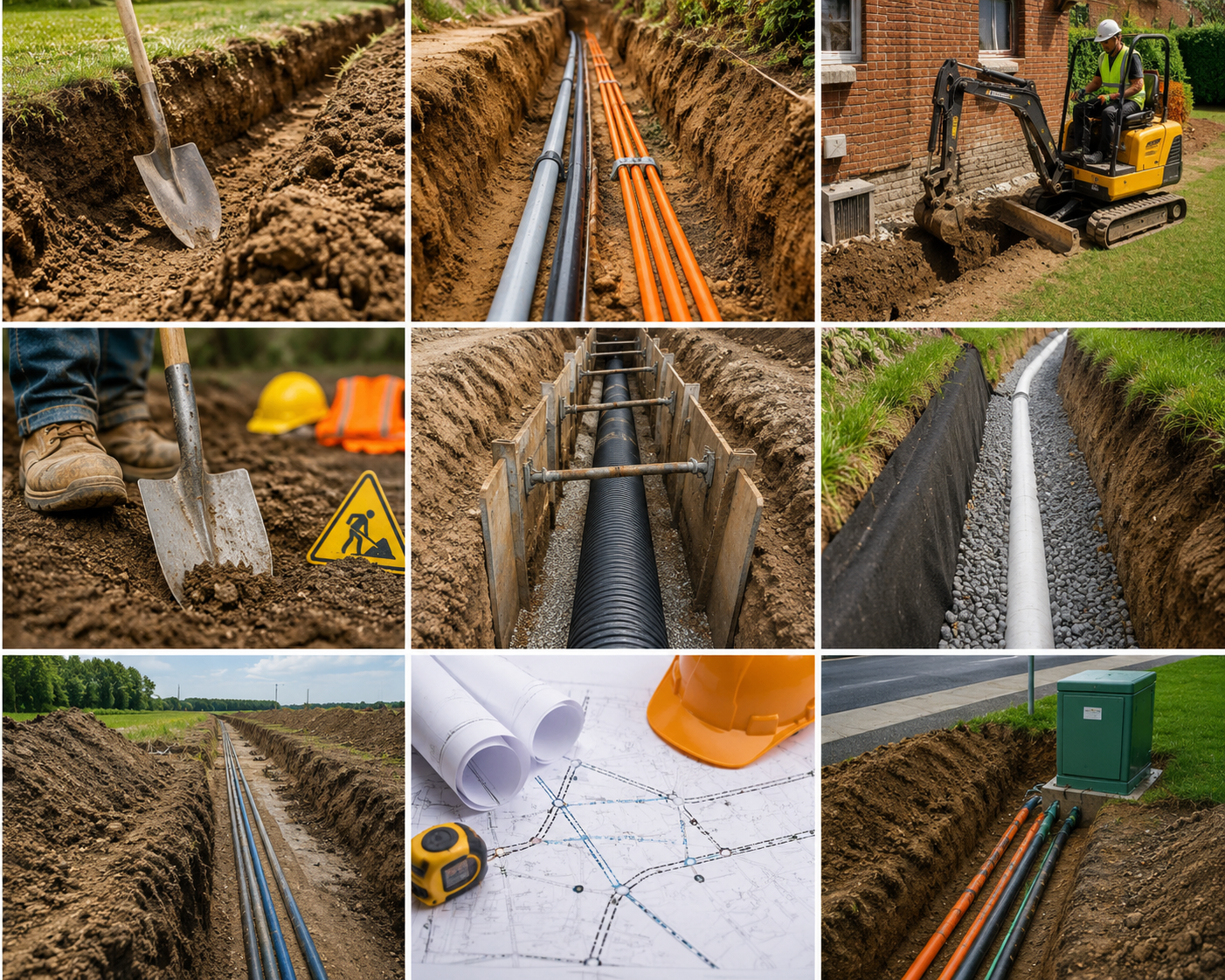
Adding a new underground utility connection can improve how a property functions, but the quality of the excavation plays an important role in the overall project. A trench needs to follow the planned route, provide sufficient space for the installation, and account for existing underground infrastructure. At the same time, excavation should avoid disturbing more of the property than necessary.
Before workers dig trenches for new utility connections, they should evaluate the project from beginning to end. Route selection, access, soil conditions, existing buried lines, excavation dimensions, material management, and restoration all deserve attention. A well-planned approach can make each stage easier to coordinate.
Begin With the Utility Connection Points
Every utility trench connects one location to another. Identifying those two points clearly provides the foundation for the excavation plan.
One end may be near a building or another developed area, while the opposite end may connect with infrastructure elsewhere on the property. Once both locations are established, possible routes can be compared.
The shortest route is worth considering, but it should not automatically be selected.
Compare Several Possible Routes
Walk each practical route and look for obstacles.
Driveways, patios, retaining walls, mature trees, gardens, fences, walkways, and structures can make excavation more difficult. Changes in elevation may also influence the amount of digging required.
A slightly longer path can sometimes provide easier access and reduce the amount of surface restoration needed afterward.
Investigate Existing Underground Infrastructure
New underground work often needs to share a property with infrastructure that is already in place.
Electrical lines, water connections, drainage components, communication infrastructure, and other buried systems may cross the proposed excavation area. These should be properly identified before workers dig trenches.
Surface appearance alone cannot confirm that an area is clear.
Allow for Unexpected Ground Conditions
Even after underground infrastructure has been considered, excavation can reveal unexpected materials.
Previously disturbed soil, compacted fill, old construction material, large stones, roots, and gravel may be hidden beneath the surface. These conditions can affect excavation progress and sometimes require adjustments.
Building flexibility into the initial plan makes unexpected conditions easier to handle.
Evaluate Equipment Access
The trench route is only part of the required work zone.
Excavation also requires space for workers, equipment, removed soil, and installation materials. On a large open property, arranging these elements may be relatively simple. On developed or confined sites, access can become a major consideration.
Before excavation begins, identify how the work area will be approached without causing avoidable damage.
Protect Surrounding Surfaces
Repeated movement over lawns and landscaped areas can create more disturbance than the trench itself.
Planning designated access routes can help limit the affected area. Soil piles should also be positioned carefully so they do not unnecessarily cover vegetation, block pathways, or interfere with drainage.
Good site organization reduces cleanup once the underground work is complete.
Establish Accurate Trench Dimensions
The required trench dimensions depend on the underground installation.
Workers should determine the necessary width and depth before excavation begins rather than making the trench larger simply for convenience. Excessive excavation produces additional soil and increases restoration requirements.
Accurate dimensions help keep the project focused.
Check Depth Along the Entire Route
A property that looks level may contain gradual changes in elevation.
As workers dig trenches, regular measurements help ensure the excavation maintains the required depth. Visual judgment alone may not be sufficient, particularly over a long utility route.
Alignment should also be checked regularly so the trench follows the intended path.
Adapt to Different Soil Types
Soil conditions can change considerably across a property.
Clay may be dense and difficult to excavate, while loose soil can behave differently once disturbed. Gravel, rocks, roots, and compacted fill can introduce additional challenges.
The excavation method should respond to actual ground conditions as they appear.
Consider the Effect of Moisture
Recent rainfall can change soil behavior dramatically.
Saturated material may be heavier and more difficult to manage. Equipment movement across wet surfaces can also increase property damage, while water may accumulate inside the excavation.
Considering weather and moisture conditions before work starts can help avoid preventable complications.
Organize Excavated Material
Utility trenching can generate a significant amount of removed soil.
Without a clear storage plan, material can interfere with access and create an unnecessarily disorganized work area. Determine where excavated soil will be placed before digging begins.
Suitable material can be retained for backfilling when appropriate.
Roots, oversized rocks, debris, and unsuitable material should be kept separate rather than automatically returned to the excavation.
Review the Installation Before Closing
Once the new utility connection has been placed, inspect the work before backfilling.
Confirm that the required installation is complete and that no additional access to the trench is needed. Addressing an issue at this stage is much easier than reopening restored ground.
This simple check can prevent avoidable excavation later.
Backfill With Stability in Mind
Backfilling affects how the property performs long after the underground work is finished.
Loosely replaced soil can settle following rainfall and seasonal ground movement. The result may be a noticeable depression along the trench route.
Careful material placement and appropriate compaction can reduce excessive settlement and provide a more stable surface.
Restore the Original Ground Profile
Final grading should match the surrounding property as closely as practical.
A low trench line can collect water, while an overly raised strip can redirect runoff. Both conditions may create problems that were not present before excavation.
Surface restoration should also reflect the original use of the area. Lawn, gravel, garden, and other surfaces each require an appropriate finishing approach.
Monitoring the route after completion can help identify minor settlement early.
Conclusion
New utility connections depend on more than the underground components being installed. The excavation supporting those connections must also be carefully planned and completed.
When workers dig trenches after evaluating the route, buried infrastructure, access, soil conditions, dimensions, weather, and material management, they can reduce unnecessary property disturbance. Accurate backfilling and thoughtful restoration then help return the excavation area to a stable, functional condition while supporting the new underground connection.
 john
john