

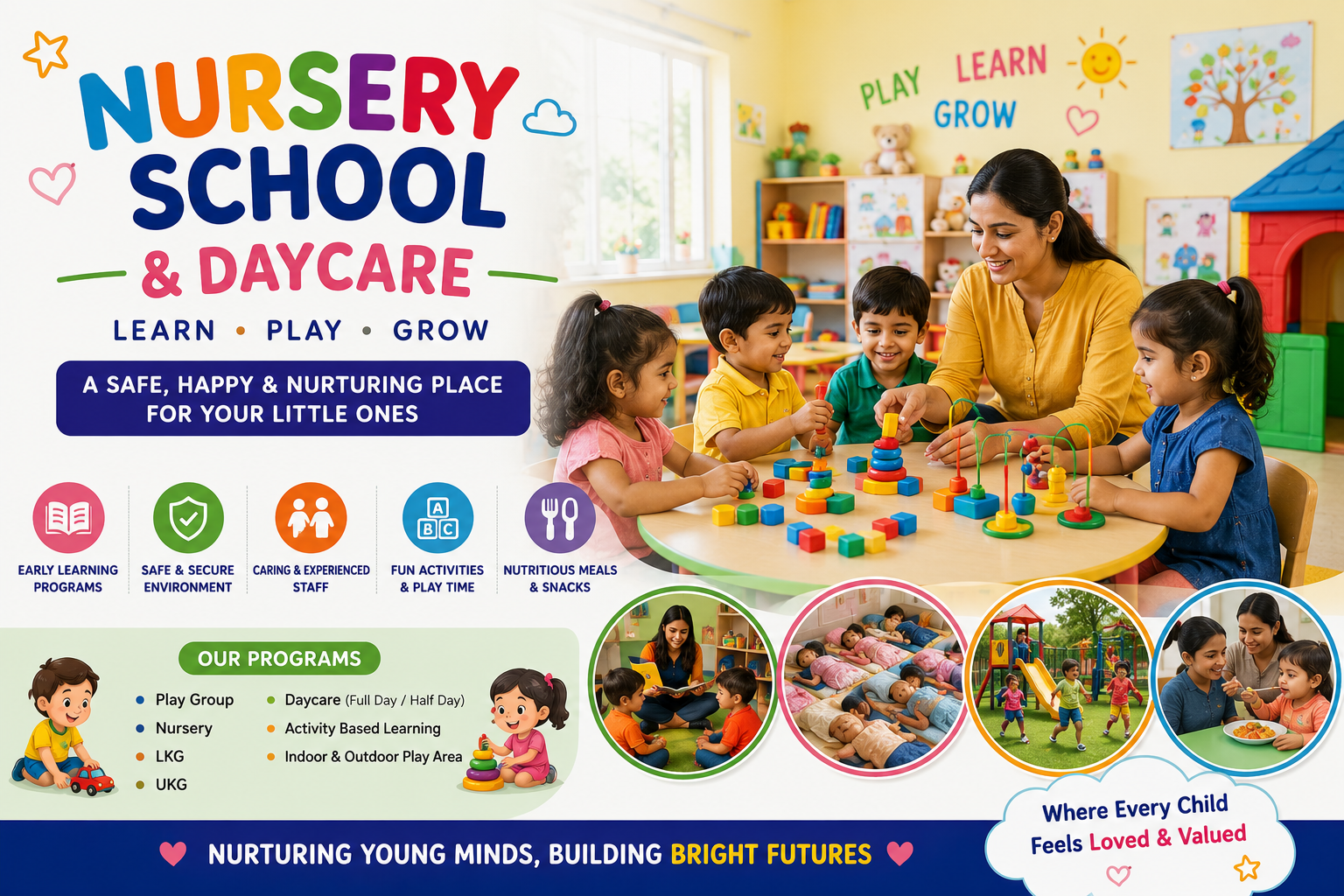
For young children, knowing what comes next can create a reassuring sense of security. Familiar patterns around arrival, play, learning, meals, movement, and departure help children understand their environment and participate with increasing confidence. A thoughtfully organized nursery school can use everyday routines as valuable opportunities for learning rather than treating them simply as ways to manage the day.
Routine does not mean making every moment identical. Instead, it provides a predictable framework within which children can explore, communicate, make choices, and gradually become more independent. When balanced with creativity and flexibility, familiar routines can support emotional, social, physical, and cognitive development.
Why Predictability Matters to Young Children
Entering nursery introduces many unfamiliar experiences. Children meet new adults, interact with classmates, use different spaces, and learn new expectations.
Predictable routines can make these changes easier to understand.
When children know that a familiar activity follows arrival or that outdoor play happens at a recognizable point in the day, they have a clearer sense of what to expect.
A nursery school can therefore use consistency to reduce uncertainty while children adjust to their surroundings.
Familiarity Can Build Confidence
As children become familiar with daily patterns, they may need fewer reminders about what happens next.
This understanding allows them to participate more independently. Instead of waiting for an adult to direct every action, children can begin preparing themselves for familiar transitions.
That growing confidence is an important part of early development.
Arrival Routines Can Set the Tone
The beginning of the day matters, particularly for children who find separation challenging.
A calm arrival routine can help children move from home into the nursery environment without unnecessary pressure.
Educators might welcome children individually and guide them toward familiar activities. Over time, recognizable arrival patterns can become reassuring.
Settling In Happens at Different Speeds
Not every child adjusts according to the same timeline.
Some children may confidently enter their nursery school from the first week. Others may need more reassurance.
Supportive educators recognize these differences and help children settle gradually rather than comparing them with classmates.
Transitions Teach Listening and Organization
Moving between activities may appear to be a practical necessity, but transitions can teach useful skills.
Children learn to listen for instructions, complete what they are doing, return materials, and prepare for another experience.
These abilities become increasingly important as children progress into more structured education.
A nursery school can make transitions manageable by keeping expectations clear and consistent.
Tidying Up Encourages Responsibility
Putting materials away is a simple routine with considerable developmental value.
Children learn that shared spaces require care and that they can contribute to maintaining their environment.
Small Responsibilities Build Independence
Children can gradually learn where materials belong and return them after completing an activity.
At first, they may need reminders or assistance. With repetition, the process can become more independent.
These small achievements help children see themselves as capable members of their classroom community.
Mealtime Routines Offer Practical Learning
Meals and snacks are not separate from development.
Depending on their age, children can practice washing their hands, organizing themselves, communicating needs, and following simple expectations.
Shared mealtimes can also provide opportunities for conversation.
Educators can encourage children to participate in manageable parts of the routine rather than completing every task for them.
Group Time Develops Participation Skills
Stories, songs, discussions, and group games introduce children to shared learning experiences.
Children gradually practice listening while someone else speaks and participating when appropriate.
A balanced nursery school should keep group activities suitable for young attention spans.
Participation Should Not Be Forced
Some children enjoy speaking in front of a group, while others prefer observing initially.
Confidence can develop gradually. Educators can invite participation without turning group activities into performances.
The aim is to help children feel increasingly comfortable as members of the group.
Free Exploration Adds Flexibility
A strong routine should still leave space for choice.
Children need opportunities to select suitable activities, investigate interests, and spend time on experiences that capture their attention.
Free exploration balances more structured parts of the nursery day.
It can also reveal valuable information about children’s interests. One child may repeatedly choose construction activities, while another gravitates toward imaginative play or creative materials.
Educators can use these observations to support further development.
Outdoor Time Creates a Change of Pace
Movement is an essential part of early childhood.
Outdoor experiences allow children to run, balance, explore, and participate in active games. These activities support coordination while providing a healthy contrast to quieter indoor experiences.
Predictable outdoor routines can also help children practice preparing for transitions and following safety expectations.
A nursery school that balances indoor and outdoor experiences can create greater variety throughout the day.
Rest and Quiet Periods Matter Too
Young children can become overwhelmed when every part of their schedule requires high levels of activity.
Quiet experiences such as stories, drawing, puzzles, or relaxed exploration provide opportunities to slow down.
Balancing energetic and calm periods can help children remain engaged without becoming overstimulated.
The rhythm of the day matters as much as the number of activities included.
A Convenient Location Can Support Routine
Consistency becomes easier when nursery attendance fits comfortably into family life.
Long or unpredictable journeys can make arrival times more difficult and add pressure to morning routines. Families considering nursery education in this area can review the nursery school location in ESTZ Chennai while planning their regular commute, drop-off, and pickup arrangements.
A practical location can support more predictable attendance while complementing the quality of the learning environment.
Parents Can Create Helpful Connections at Home
Home and nursery routines do not need to be identical. However, similar expectations around manageable responsibilities can reinforce children’s growing independence.
For example, a child who puts away classroom materials can also be encouraged to organize toys at home.
Keep Expectations Age-Appropriate
Routine should support children rather than become a source of pressure.
Young children will sometimes need reminders, extra time, or assistance. Progress develops through repeated opportunities rather than immediate perfection.
Parents and educators can encourage effort while recognizing individual developmental differences.
Conclusion
A nursery school can use daily routines to teach much more than what happens next. Familiar patterns can support emotional security, independence, responsibility, listening, communication, organization, and confidence.
The strongest routines provide structure without making the day rigid. Children still need opportunities for creativity, movement, social interaction, and independent exploration.
When everyday activities are approached thoughtfully, even simple moments such as arriving, putting materials away, preparing for meals, or moving between activities can become meaningful learning experiences. Over time, these routines help children understand their environment, manage increasing responsibility, and approach future classroom experiences with greater confidence and independence.
 john
john