
Managing waste may seem simple until unwanted materials begin piling up after a renovation, cleanup, move, or construction project. At that point, tossing everything into ordinary garbage is rarely the best approach. Different materials require different handling methods, and responsible disposal can reduce unnecessary landfill use while keeping properties cleaner and safer.
Searching for waste management services near me can help residents, contractors, property managers, and businesses find practical options for handling unwanted materials. However, knowing what to look for before choosing a disposal method makes the entire process easier.
Why Proper Waste Management Matters
Waste management involves much more than removing unwanted material from a property. A well-organized disposal process considers where materials go, whether they can be recycled, and how they should be separated.
Construction debris, wood, cardboard, metal, concrete, household items, and renovation waste can all require different approaches. Mixing everything together may reduce recycling opportunities and make disposal less efficient.
Responsible waste handling can also help keep work areas organized. Loose debris creates obstacles, takes up valuable space, and may create safety concerns. Removing materials regularly prevents unnecessary accumulation and makes ongoing projects easier to manage.
Start by Identifying Your Waste
Before loading a vehicle or arranging disposal, take a few minutes to identify what you actually have.
Separate Recyclable Materials
Many common materials may have recycling potential. Wood, metals, cardboard, concrete, and certain construction materials can often be separated from general waste.
Sorting at the source is usually easier than trying to separate mixed debris later. Designate different areas for recyclable material, reusable items, and general garbage whenever space allows.
This simple habit can improve organization and support landfill diversion.
Identify Materials Requiring Special Handling
Not everything belongs in a standard waste load. Certain materials may have specific acceptance or disposal requirements.
Before transporting an unfamiliar material, confirm whether the intended facility accepts it. Doing this ahead of time can prevent unnecessary trips and delays.
Choosing a Convenient Disposal Option
People searching for waste management services near me are often looking for convenience, but proximity should not be the only consideration.
A suitable disposal option should match the type and volume of material being generated. A homeowner clearing a garage may have very different needs from a contractor managing debris throughout a renovation.
Consider how frequently waste will be produced, whether materials can be sorted, and how they will be transported.
Check Accepted Materials Before Leaving
Acceptance rules can differ between facilities. Some locations handle a broad range of materials, while others focus on specific recyclable or construction-related items.
Creating a quick inventory before departure makes the process more efficient. It also reduces the chance of arriving with materials that cannot be unloaded.
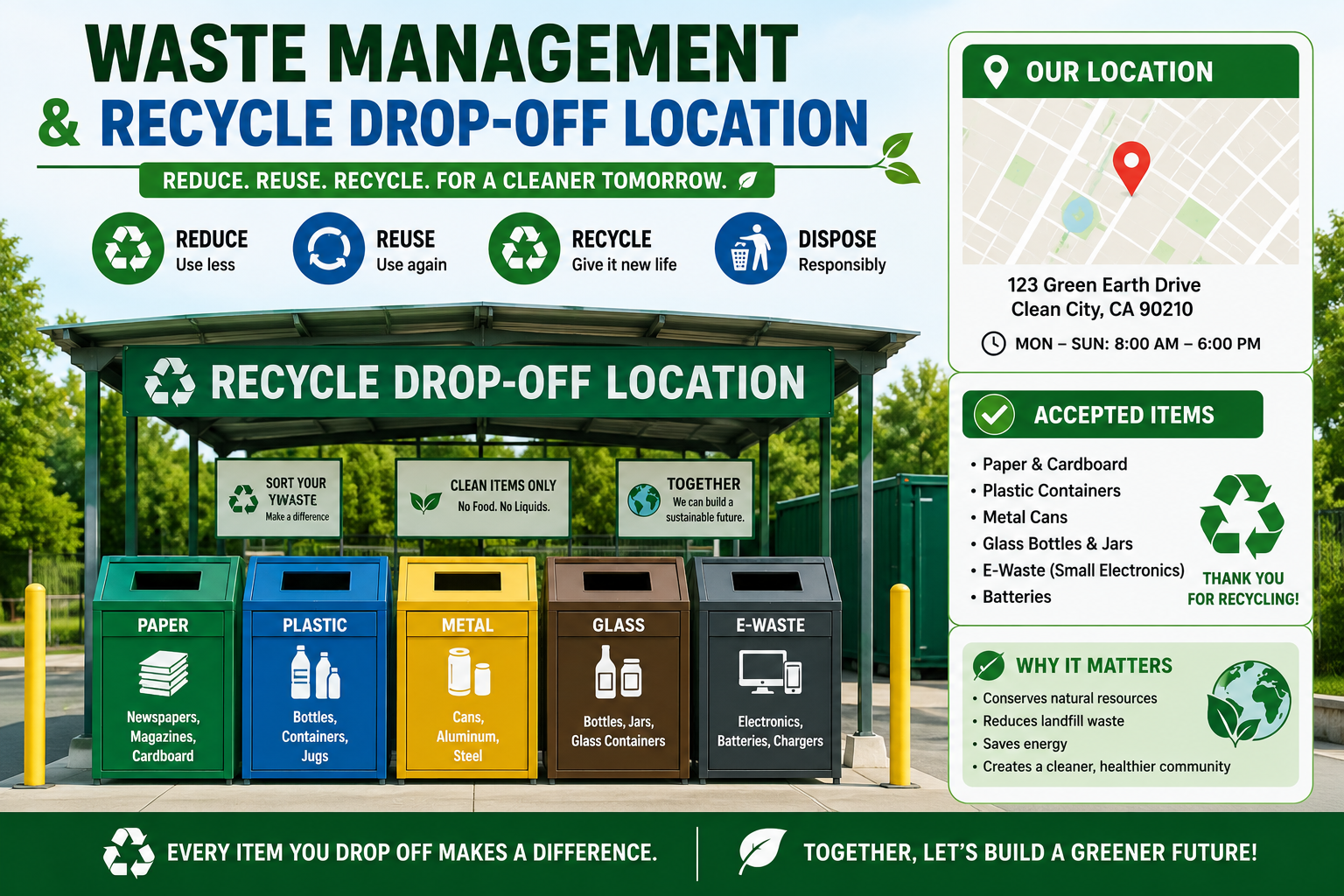
For people evaluating local options, checking a local recycling and waste drop-off location can also help with planning a convenient disposal trip.
Make Waste Sorting Part of the Project
Waste management becomes much easier when it is planned from the beginning rather than treated as an afterthought.
During renovation or construction work, establish designated collection areas before debris starts accumulating. Clearly separate materials such as wood, metal, cardboard, and general waste.
For household cleanouts, use the same principle on a smaller scale. Create separate piles or containers while sorting through unwanted belongings.
Avoid Mixing Everything Together
Throwing all debris into one pile may feel faster initially, but it often creates additional work later.
When recyclable materials become mixed with general garbage, recovering them may become difficult. Keeping materials separated from the start supports more efficient handling and can increase the amount diverted from disposal.
Plan Transportation Carefully
Transportation is another important part of responsible waste management.
Before moving debris, estimate the volume and weight of the load. Avoid overloading vehicles or leaving loose materials unsecured. Smaller, organized loads are often easier to unload and sort than one oversized mixed load.
If several trips will be required, group similar materials together whenever practical. This approach can simplify unloading and help maintain separation throughout the process.
Waste Management for Renovation and Construction Projects
Renovations can generate surprising amounts of debris. Drywall, lumber, packaging, old fixtures, flooring, and other materials can quickly fill available space.
Planning disposal before work begins helps prevent these materials from interfering with the project.
Contractors and property owners can establish a routine for removing debris at regular intervals. Doing so keeps pathways clearer, reduces clutter, and makes it easier to identify recyclable materials before they become contaminated.
Building Better Disposal Habits
Responsible waste management does not need to be complicated. A few consistent habits can make a meaningful difference.
Sort materials early, verify acceptance requirements, secure loads properly, and avoid unnecessary mixing. Whenever possible, consider recycling before treating material as garbage.
These practices work for everything from small household cleanups to larger construction projects.
Conclusion
Searching for waste management services near me is only the first step toward managing unwanted materials effectively. The best results come from combining convenient disposal options with thoughtful sorting and planning.
Identify materials before disposal, separate recyclable items, confirm acceptance requirements, and organize transportation carefully. With a simple system in place, waste removal becomes easier, work areas stay cleaner, and more useful material has an opportunity to avoid the landfill.
Responsible waste management ultimately comes down to making informed choices before unwanted material leaves your property.
 john
john