

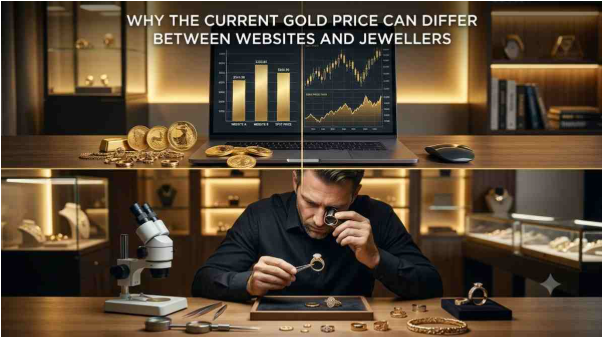
Why the Current Gold Price Can Differ Between Websites and Jewellers
Gold has remained valuable across generations, serving as jewellery, an investment asset and a store of value. Many people also consider it during periods of economic uncertainty. However, buyers often notice that the gold price displayed on websites differs from the rate quoted by local jewellers. These differences can create confusion, especially when comparing prices before making a purchase.
The variation usually comes from differences in pricing methods, gold purity, product type, market updates and additional charges. Understanding how gold prices are calculated can help buyers compare quotations and make more informed purchasing decisions.
What You Should Know About Gold Pricing
Gold is traded in international markets, where its spot price changes in response to market activity, economic developments and investor demand. The spot price generally represents the current market value of gold for immediate delivery and is commonly quoted per troy ounce in US dollars.
Websites that publish gold prices may use international spot prices, domestic market benchmarks or rates supplied by market data providers. Jewellers, on the other hand, usually consider local market rates and other costs when setting their selling prices.
When checking the current gold price, buyers should confirm the date, time, location and purity associated with the displayed rate. This helps ensure that they are comparing equivalent prices rather than different types of gold quotations.
The Difference Between Spot Prices and Retail Gold Rates
The spot price is an important benchmark, but it is not necessarily the final price a consumer pays for physical gold. Retail prices can include additional costs depending on the product, seller and location.
Some common factors that contribute to the difference include:
- Retail markups: Jewellers and online sellers may add a margin to cover operating expenses, transportation, storage and business costs. The margin can vary between sellers and products.
- Product type: Gold bars and coins generally have different additional costs from jewellery. Jewellery involves design, manufacturing and craftsmanship, which can increase its final price.
- Gold purity: The price depends on the amount of pure gold in the product. For example, 24-karat gold contains approximately 99.9% gold, while 18-karat gold contains 75% gold.
- Making charges: Jewellery prices may include making charges based on the design, craftsmanship and jeweller’s pricing method.
- Taxes and other applicable charges: The final purchase amount may include GST and other applicable charges, depending on the transaction.
Therefore, buyers should not compare an international spot price directly with a jeweller’s final jewellery quotation. They should first check whether both prices refer to the same purity, weight and product type.
Global Economic Indicators That Influence Gold Prices
Economic conditions play an important role in determining gold prices. Interest rates, inflation expectations, currency movements and investor confidence can influence demand for the metal.
For example, changes in interest rates can affect the attractiveness of gold compared with interest-bearing investments. Gold prices may also respond to inflation expectations and movements in major currencies.
A weaker US dollar can make dollar-denominated gold less expensive for buyers using other currencies, potentially supporting demand. However, the relationship is not automatic, as several market factors influence prices simultaneously.
Websites that track international markets may update their displayed rates frequently as new economic information becomes available. This is one reason their prices may differ from quotations collected from local jewellers at another time.
How Geopolitical Events Affect Gold Rates
Gold is often considered a safe-haven asset during periods of uncertainty. Political tensions, international conflicts, trade disputes and economic crises can influence investor sentiment and increase demand for gold.
When uncertainty rises, some investors may move towards gold as part of their risk-management strategy. This can put upward pressure on prices. However, gold does not always rise during geopolitical instability because currency movements, interest rates and broader market conditions also affect its performance.
Online financial platforms may reflect these market movements quickly, while local jewellers may update their retail rates at different intervals. As a result, buyers checking prices across different sources may notice temporary variations.
How Supply and Demand Influence Gold Prices
Like other commodities, gold prices are influenced by supply and demand. Mining production, recycled gold, central bank purchases, investment activity and jewellery demand all contribute to market conditions.
When demand increases faster than available supply, prices may experience upward pressure. Conversely, weaker demand or increased supply can influence prices in the opposite direction.
Demand can also vary across countries and seasons. In India, festivals and wedding periods often contribute to higher jewellery demand. However, local retail demand does not independently determine the international gold price. Domestic prices are also influenced by global benchmarks, currency movements, import-related costs and local market premiums.
The Impact of Market Speculation on Gold Rates
Market speculation can contribute to short-term movements in gold prices. Traders and investors buy and sell gold-related financial instruments based on their expectations about future economic conditions, interest rates, currency movements and demand.
These activities can influence futures prices and overall market sentiment. As a result, financial websites may show frequent price movements during active trading sessions.
However, speculative trading is only one factor affecting gold prices. Physical demand, investment flows, central bank activity and broader economic conditions also play important roles.
Why Currency Fluctuations Matter When Checking Gold Prices
Gold is commonly traded internationally in US dollars. Therefore, changes in the value of the Indian rupee against the US dollar can affect domestic gold prices.
When the rupee weakens against the dollar, importing gold may become more expensive, even if the international gold price remains unchanged. A stronger rupee can reduce this currency-related cost, although other factors may still influence the domestic rate.
Currency exchange rates can change throughout the day. Websites using frequently updated market data may reflect these movements sooner than retailers that revise their prices at fixed intervals.
The Role of Technology in Accessing Live Gold Prices
Digital platforms have made it easier for consumers to follow gold prices without visiting a jewellery store. Many financial websites provide price updates, historical charts, market information and calculators that help buyers understand gold values.
These tools can support better purchasing decisions by allowing consumers to compare rates, check price movements and estimate the value of gold based on weight and purity.
Buyers can use resources displaying the live gold price to follow market movements. However, they should check whether the displayed figure represents an international spot rate, a domestic benchmark or a retail selling rate.
Online Gold Price Calculators
Gold price calculators help estimate the value of gold by using details such as weight, purity and the selected rate per gram. They can be useful when comparing jewellery quotations or estimating the value of existing gold.
However, a basic calculator may not include making charges, wastage charges, taxes or other retail costs. Buyers should check the calculator’s inputs and understand what its result includes before relying on the estimate.
Online Pricing and Competition
Online sellers may have different operating expenses and pricing strategies from traditional jewellery stores. Some may offer lower margins or promotional prices, while others may charge additional delivery, insurance or service fees.
Therefore, an online price is not automatically cheaper than a jeweller’s quotation. Buyers should compare the complete payable amount, including all applicable charges, before making a decision.
Greater Price Transparency
Online access to gold rates has made price comparisons easier. Consumers can check rates from multiple sources and ask jewellers to explain differences in their quotations.
This transparency encourages buyers to understand the components of a gold purchase rather than relying only on the displayed price per gram. It also helps them ask more specific questions about purity, weight, making charges and taxes.
Why Jewellers May Quote Higher Gold Prices
Jewellers may quote a higher final price than the rate displayed on a financial website because the two figures may represent different things. A website may show only the gold rate, while a jewellery quotation can include manufacturing and retail-related costs.
Some common reasons for higher jewellery prices include:
- Design and craftsmanship: Intricate jewellery requires additional time, skill and manufacturing work. Making charges may therefore vary according to the design.
- Customer services: Some jewellers provide product guidance, repair services, exchange facilities, guarantees or return policies. These services may be reflected in their pricing.
- Business and operating expenses: Store rent, employee costs, security, storage and other expenses can influence retail margins.
- Local market conditions: Competition, customer demand, supply arrangements and retailer pricing policies can create differences between jewellers.
- Product-specific costs: Stone settings, intricate finishing and other design features can increase the total price beyond the value of the gold content.
Buyers should request an itemised invoice that clearly shows the gold rate, purity, net gold weight, making charges and applicable taxes. Comparing these details provides a more accurate picture than comparing only the final price.
Using Reliable Financial Information Before Making a Gold Purchase
Before purchasing gold, consumers should check the latest available rates, compare quotations and understand the charges involved. They should also verify the purity of the jewellery and look for BIS hallmarking when purchasing hallmarked gold.
For additional financial information and services, consumers can visit Bajaj Finance. Reviewing reliable financial resources can help buyers understand available services and make more informed financial decisions.
It is also important to remember that the lowest displayed rate does not always represent the best overall deal. Buyers should consider product quality, purity, billing transparency, service terms and the complete purchase cost before choosing a seller.
Conclusion
Differences between gold prices displayed on websites and quotations provided by jewellers usually arise from variations in pricing methods, update timings, purity, product types and additional retail charges. The international spot price serves as an important benchmark, but it is not necessarily the final amount payable for physical gold or jewellery.
By checking the rate’s source, comparing equivalent purity levels and reviewing all additional charges, buyers can understand price differences more clearly. Taking these steps makes it easier to evaluate quotations and make informed gold-purchasing decisions.