

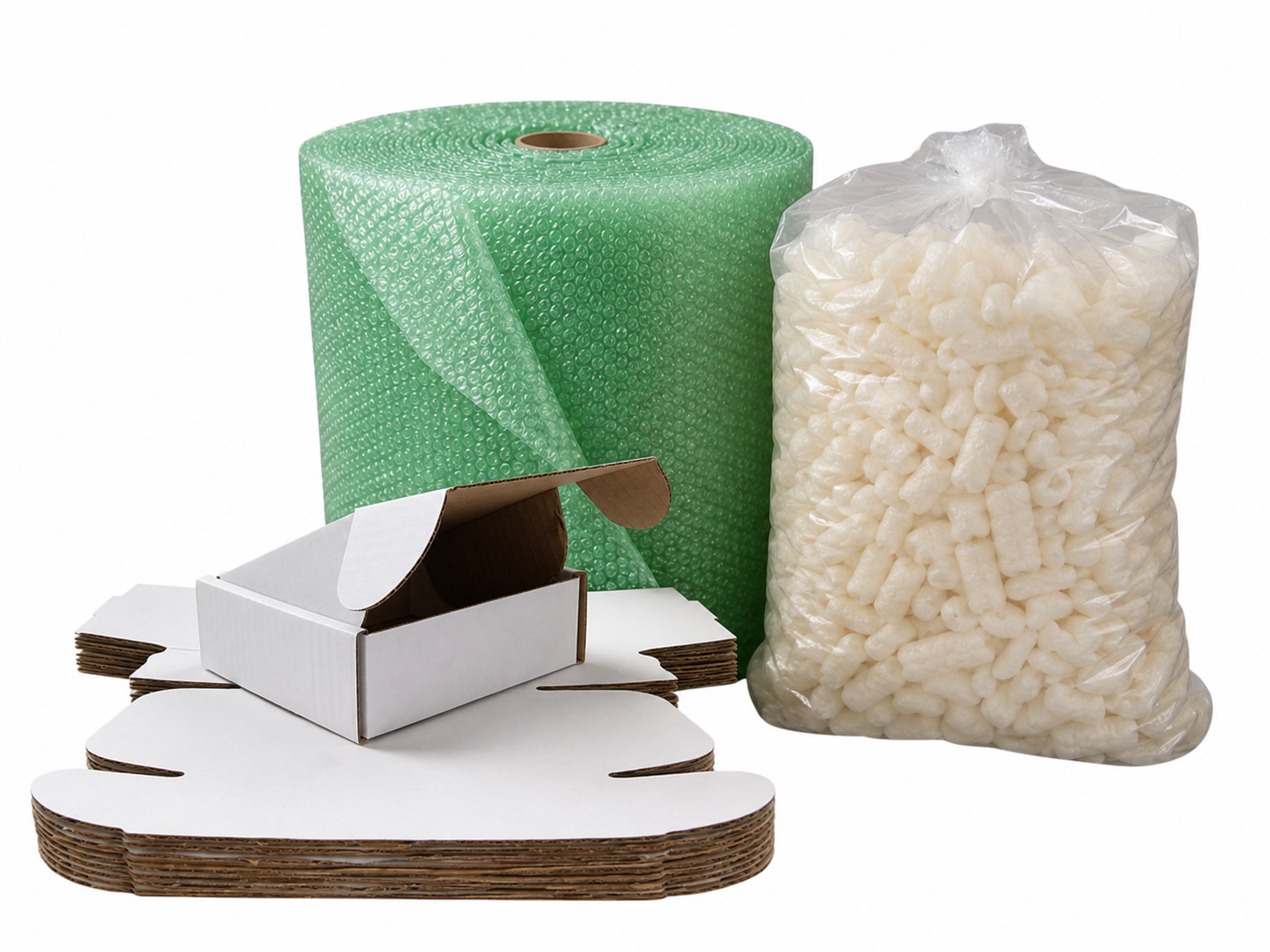
Businesses still need products to arrive safely, but they also want materials that create less waste. Customers are noticing too. Nobody wants an eco-friendly product buried under packaging that creates another environmental headache. For many companies, this is becoming part of everyday purchasing decisions, rather than a once-a-year marketing exercise or a token change made for appearances alone. That shift matters too.
That is why biodegradable, recyclable and plant-based materials are becoming more popular.
Why Should Everyone Use Biodegradable Packaging Materials?
Let’s face it, packaging is something we use every day, so choosing materials that are kinder to the environment makes sense. Biodegradable packaging can help businesses reduce their dependence on conventional plastic while still protecting products.
Here are a few reasons why making the switch is worth considering:
- Less long-term waste: Many biodegradable materials are designed to break down more naturally than traditional plastic
- A smarter choice for businesses: Using greener materials can help companies respond to growing customer expectations around sustainable packaging
- Useful for everyday packing: Options such as plant-based loose fill and paper protection can handle many common shipping needs
- Better brand perception: Customers often appreciate businesses that make visible efforts to reduce unnecessary packaging waste
- Supports a greener future: Choosing biodegradable options more regularly encourages wider use of lower-impact packaging materials
You do not have to change everything at once. Even replacing one commonly used packaging material can be a practical first step.
What Are the 7 Materials Worth Watching?
1. Recyclable Cardboard Boxes
Cardboard remains one of the most useful packaging materials. It gives products structure and is easy to handle.
- Available in different sizes and strengths
- Easy to stack, label and store
- Suitable for everyday shipping
2. Kraft Paper
Kraft paper can wrap products, separate items, and protect surfaces from scratches.
- Handy for wrapping fragile goods
- Helps prevent surface scratches
- Easy to fold around different shapes
3. Biodegradable Bubble Wrap
Fragile products still need cushioning. Biodegradable bubble wrap gives businesses an alternative when air-filled protection is needed.
- Helps absorb knocks during transit
- Useful for glass, ceramics and electronics
- Can be wrapped around individual products
4. Starch-Based Biodegradable Loose Fill
Loose fill becomes useful when a box has awkward empty spaces. Those gaps allow products to move around during delivery.
Starch-based loose fill can settle around products and fill those spaces without adding much weight.
- Made using plant-based starch
- Useful around unusual shapes
- Helps limit movement inside cartons
5. ECOFLO Loose Fill for Flexible Packing
Orders vary, so fixed inserts can quickly become inconvenient.
ECOFLO loose fill provides a flexible way to handle changing packing requirements.
- Fills awkward gaps around products
- Works with different shapes and sizes
- Fits easily into busy packing routines
6. Biodegradable Air Pillows
Air pillows provide cushioning without adding much weight. This can be useful for e-commerce businesses where parcel weight and storage space matter.
Biodegradable versions give businesses another option.
- Useful for filling empty spaces
- Adds cushioning without much weight
- Easy to combine with cartons
7. Recycled Paper Void Fill and Gummed Paper Tape
Recycled paper can become protective void fill, while gummed paper tape can seal cartons. Together, they offer a simple paper-based packing approach.
- Helps fill empty spaces inside cartons
- Provides cushioning for everyday products
- Works well with corrugated packaging
How Do These Materials Compare?
| Material | Main use | Good for |
| Cardboard | Structure | Shipping |
| Kraft paper | Wrapping | Gifts |
| Biodegradable bubble wrap | Cushioning | Fragile goods |
| Starch loose fill | Void filling | Irregular products |
| ECOFLO loose fill | Protection | Mixed orders |
| Biodegradable air pillows | Cushioning | E-commerce |
| Recycled paper | Filling | Everyday parcels |
Which Material Should a Business Choose?
There is no single winner. The right choice depends on the product, journey and protection needed.
A business shipping books has different requirements from one sending glassware. An industrial supplier may prioritise strength, while an online retailer may prioritise packing speed.
Try a new material on real orders first. Check damaged goods, packing time, storage needs and customer feedback. That will show whether the change works.
What Could Packaging Look Like in the Future?
The future will probably not belong to a single miracle material. Businesses are more likely to combine different options according to the job.
A carton could provide structure, kraft paper could protect surfaces, plant-based filler could fill gaps, and biodegradable cushioning could protect fragile products.
Packaging has never been a one-size-fits-all job.
Conclusion
Packaging is changing because businesses and customers are asking better questions about waste and protection.
From cardboard Boxes and kraft paper to biodegradable bubble wrap, starch-based fillers, air pillows and recycled paper, there are already practical alternatives worth considering.
The sensible approach is not to replace everything simply because a material sounds greener. Look at what your products need, test alternatives properly and choose materials that balance protection, practicality and responsible disposal.
FAQs
- Are biodegradable materials suitable for shipping?
Yes, many are suitable for everyday shipping, although the right option depends on the product, weight and fragility.
- Is biodegradable bubble wrap suitable for fragile products?
It can provide cushioning for glassware, ceramics and electronics, although delicate products may need extra protection.
- What is biodegradable loose fill used for?
It fills empty spaces inside cartons and helps reduce product movement during handling and transport.
- Can recycled paper replace plastic void fill?
For many shipments, yes. It can provide useful cushioning, especially for products that are not extremely fragile.
- How can a business start using greener packaging?
Start with one commonly used material. Test an alternative on real shipments, check damage rates and packing time, then review disposal requirements before switching more widely.
 Mike
Mike