

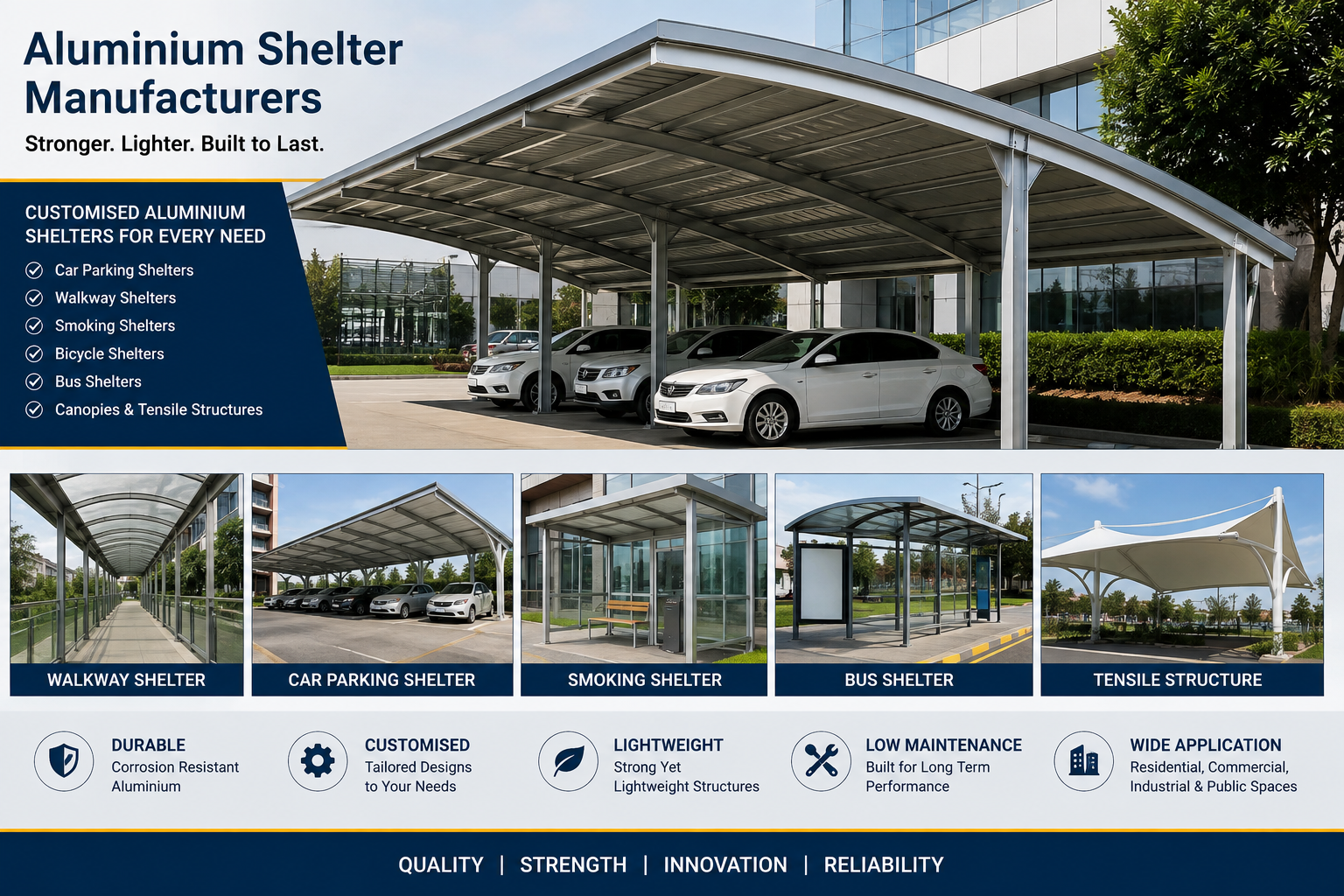
A transit stop has a simple purpose: give passengers a practical place to wait for transportation. Yet creating a successful waiting environment involves much more than installing a roof beside the road. Weather exposure, passenger movement, visibility, accessibility, maintenance, and the surrounding streetscape all influence how well a shelter performs.
For municipalities, transportation planners, and property developers, selecting suitable aluminum transit shelter suppliers is an important part of that process. Aluminum has characteristics that make it well suited to demanding outdoor environments, while flexible shelter configurations can address the different needs of individual locations.
Why Aluminum Makes Sense for Outdoor Transit Infrastructure
Transit shelters are exposed to environmental conditions every day. Rain, moisture, sunlight, dust, temperature changes, and regular public use can gradually affect structural materials.
Aluminum provides natural corrosion resistance, making it a practical choice for long-term outdoor applications. It also offers a favorable strength-to-weight relationship, allowing structures to remain durable without relying on unnecessarily heavy components.
These qualities explain why aluminum transit shelter suppliers often work with projects where longevity and manageable maintenance are priorities.
However, material selection alone does not determine shelter performance. Good engineering and careful detailing are equally important.
Understanding the Demands of a Transit Stop
Before choosing a shelter, planners should examine how the site functions throughout the day.
A busy stop near a commercial district may experience continuous passenger traffic. A residential location might serve fewer passengers but have limited sidewalk space. Meanwhile, an exposed roadside stop may need greater protection from wind and rain.
Passenger Volume Shapes the Design
Shelter dimensions should reflect expected usage. If the structure is too small, passengers may be forced to wait outside. An unnecessarily large structure, on the other hand, may consume valuable pedestrian space.
Experienced aluminum transit shelter suppliers can provide configurations that accommodate different capacities and physical footprints.
The goal should be to create sufficient waiting space without interfering with pedestrian circulation or boarding activity.
Weather Protection Requires More Than a Roof
Passengers naturally expect a shelter to provide protection from uncomfortable weather. Achieving that goal requires thoughtful design.
Roof projection, side panels, shelter orientation, and prevailing weather patterns can all affect passenger comfort.
Managing Wind and Rain
Side panels can help reduce exposure to wind-driven rain. Their position should be considered carefully, particularly at open or exposed locations.
At the same time, shelters should maintain adequate visibility and an appropriate sense of openness. Transparent sections can provide protection without completely separating passengers from their surroundings.
When comparing aluminum transit shelter suppliers, planners should look beyond basic dimensions and consider how each shelter configuration responds to actual environmental conditions.
Accessibility Creates Better Stops for Everyone
A transit stop should support passengers with a wide range of mobility needs. Accessible planning benefits people using wheelchairs and walkers, as well as passengers traveling with strollers, shopping bags, bicycles, or luggage.
Clear entrances and sufficient internal circulation space are essential. Seating should also be positioned so that it does not unnecessarily restrict movement.
A well-designed shelter should integrate accessibility into its basic layout rather than treating it as an additional feature.
Those researching accessible transit shelter planning should consider both the shelter itself and its relationship with sidewalks, boarding zones, and surrounding pedestrian routes.
Maintenance Can Influence Long-Term Performance
Public infrastructure requires ongoing care. Planning for maintenance before installation can reduce complications later.
Simplify Cleaning and Component Replacement
Surfaces that are easy to reach and clean can make routine upkeep more efficient. Likewise, replaceable panels and modular components may allow damaged sections to be addressed without major structural work.
Aluminum transit shelter suppliers should be evaluated partly on how practical their designs are to inspect, maintain, and repair.
Drainage is another important consideration. Roof systems should guide rainwater away from passenger entrances and primary waiting areas whenever possible.
Design Should Complement the Streetscape
Transit shelters are highly visible elements of public infrastructure. Even when functionality is the primary objective, appearance still matters.
The shape of the frame, roof profile, panel arrangement, proportions, and finish can influence how a shelter fits within its surroundings.
Consistency Without Making Every Stop Identical
Transportation networks often benefit from a recognizable visual identity. However, consistency does not require every shelter to have exactly the same dimensions or configuration.
Aluminum provides useful fabrication flexibility, allowing related designs to be adapted for different locations. Aluminum transit shelter suppliers can therefore support a coordinated appearance while accommodating practical variations between sites.
This approach can help transit infrastructure feel connected without ignoring local conditions.
Questions to Ask Before Making a Decision
Before finalizing a shelter design, planners should examine several practical issues. How many passengers typically use the stop? Which direction does severe weather usually approach from? Is the sidewalk wide enough for comfortable circulation? Will components be easy to clean or replace? Does the design provide adequate visibility?
These questions help shift the selection process away from appearance alone.
Strong aluminum transit shelter suppliers should be able to address structural requirements alongside passenger comfort, site limitations, accessibility, and maintenance considerations.
Building Transit Stops for Long-Term Use
A successful shelter combines durable materials with intelligent planning. Aluminum can offer corrosion resistance, structural efficiency, and design versatility, but those advantages deliver the greatest value when the complete shelter responds to its location.
Choosing aluminum transit shelter suppliers should therefore involve evaluating more than the basic structure. Engineering quality, weather protection, accessibility, maintainability, visual integration, and adaptability all deserve attention.
When these elements are considered together, a transit shelter becomes more than a roadside structure. It becomes a durable and practical part of the passenger journey, helping create public transportation environments that remain comfortable, organized, and functional year after year.
 john
john