

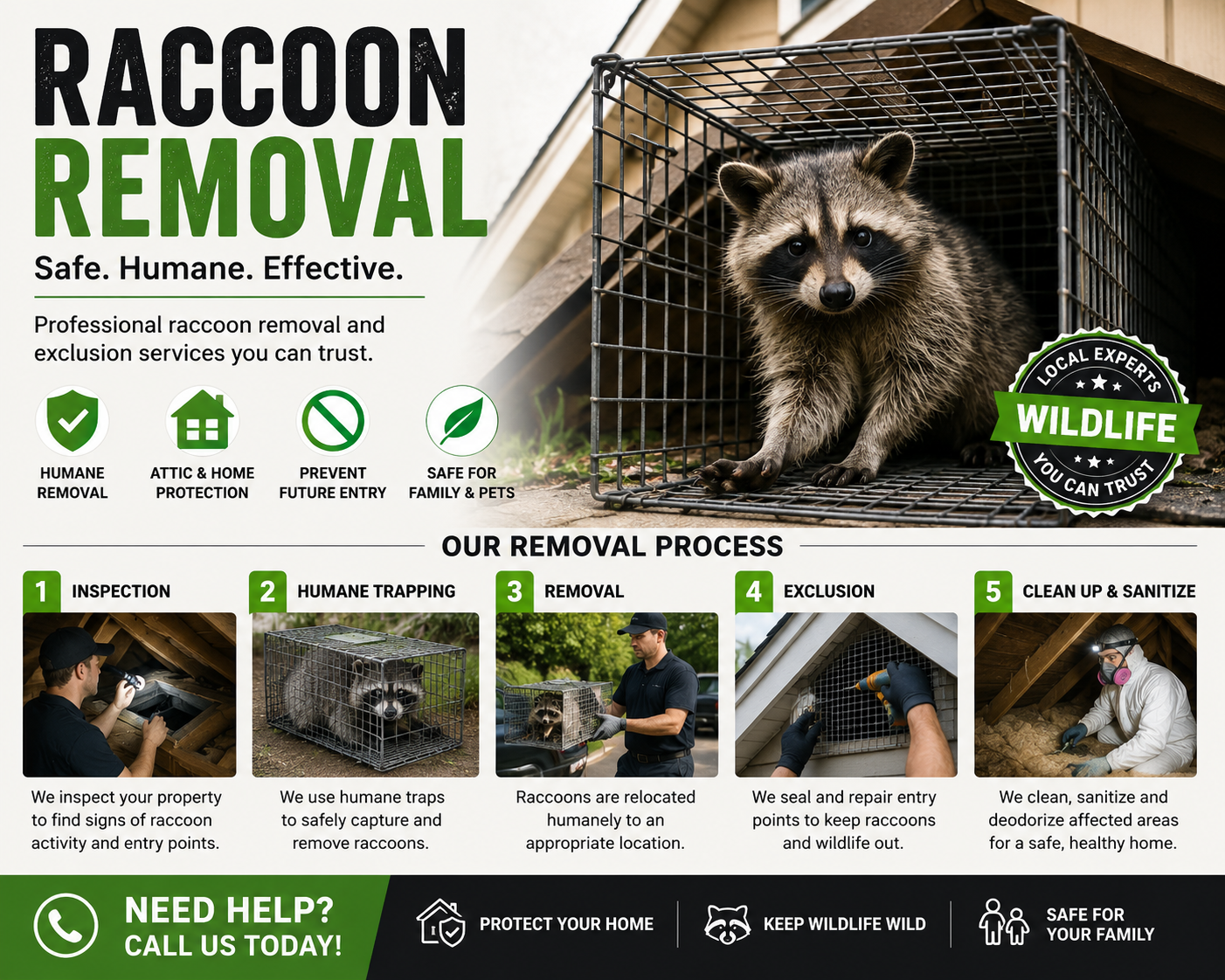
Discovering a raccoon around your home can quickly turn from a minor concern into a serious nuisance. A raccoon that occasionally crosses the yard is one thing, but an animal living in the attic, chimney, garage, or beneath a deck requires attention. Raccoons are strong, intelligent, and remarkably capable of finding weak areas in residential structures.
When dealing with raccoon removal in London, the best approach combines careful identification, responsible removal, property protection, and prevention. Understanding what attracts raccoons and how they behave can help homeowners make better decisions before the situation becomes more difficult.
Why Raccoons Choose Homes for Shelter
Raccoons do not enter residential properties simply to cause damage. They are usually looking for a secure place to rest, escape harsh weather, or raise their young.
Attics can closely resemble the protected spaces raccoons naturally seek. They are generally quiet, warm, elevated, and protected from predators. Other areas, such as chimneys, sheds, crawl spaces, and spaces beneath decks, can offer similar advantages.
Once a raccoon finds reliable shelter, it may continue using the location unless the access point is properly addressed.
Easy Food Can Bring Raccoons Closer
Shelter is only part of the attraction. Food availability can significantly influence raccoon activity around residential properties.
Common attractants include unsecured garbage, compost, outdoor pet food, birdseed, fallen fruit, and food scraps.
A raccoon that regularly finds something to eat may begin treating the property as part of its nightly route. Removing these attractants can help discourage repeat visits.
Identify the Problem Before Taking Action
Hearing noises does not automatically mean a raccoon is responsible. Squirrels, birds, mice, and other animals may also enter structures.
Raccoons, however, tend to create heavier sounds than smaller wildlife. Homeowners frequently describe slow footsteps, thumping, scratching, or movement during nighttime hours.
Look outside for additional evidence. Damaged vents, loose soffits, disturbed roofing, tracks, droppings, or repeatedly overturned garbage may help confirm raccoon activity.
Correct identification matters because different wildlife situations can require different responses.
What Makes Raccoon Removal Challenging?
Raccoons are capable climbers and can use fences, trees, downspouts, and structural features to reach roofs. Their front paws also allow them to manipulate weak building materials.
Simply closing an obvious opening may therefore be ineffective.
More importantly, sealing an entrance without checking the interior can create a serious problem if an animal is still inside.
Young Raccoons Require Extra Consideration
One of the most important factors in raccoon removal in London is determining whether a female has established a den with young.
If dependent young are present, removing or excluding the mother without addressing them can leave the babies trapped inside. The mother may also attempt to regain access, potentially causing additional damage.
A careful assessment should therefore come before permanent exclusion work.
The Importance of Inspecting the Entire Property
A complete inspection should extend beyond the location where noises were first noticed.
Roof vents, soffits, fascia boards, chimney areas, roof intersections, siding, garages, sheds, and spaces underneath decks should all be considered.
The inspection serves two purposes. First, it helps locate the active entry point. Second, it reveals weaknesses that could become future access points.
This broader perspective is important because solving one opening while ignoring several nearby vulnerabilities may only provide a temporary solution.
Removal Should Be Followed by Exclusion
Once it has been confirmed that the raccoon is no longer occupying the structure, the next priority is preventing re-entry.
Damaged openings should be repaired using suitable, durable materials. Weak vents or other vulnerable structural features may also need reinforcement.
Homeowners searching for professional wildlife removal assistance can benefit from considering both the immediate animal problem and the conditions that allowed wildlife access.
Prevention Begins Around the Yard
Exterior habits can make a significant difference.
Garbage and compost containers should remain securely closed. Pet food should be brought indoors, particularly overnight. Fallen fruit and food waste should be removed promptly.
Homeowners can also periodically inspect roof edges, soffits, vents, and other exterior components for deterioration.
Preventive maintenance is generally easier than dealing with an animal after it has established a den.
What Happens After Removal?
The work should not end as soon as the raccoon leaves.
Inspect the occupied area for disturbed insulation, damaged materials, waste, or other signs of contamination. Areas used repeatedly by wildlife may require additional attention before they can be considered fully restored.
It is also useful to monitor the property over the following days. Listen for unusual nighttime noises and look for fresh signs around previously affected areas.
If activity continues, another access point may exist.
Conclusion
Raccoon removal in London is most effective when homeowners address the entire situation rather than focusing solely on getting an animal outside. Understanding why the raccoon entered, identifying all potential access points, checking for young, and preventing re-entry are essential parts of a responsible approach.
Simple preventive measures can also make a home significantly less attractive to wildlife. Secure food sources, maintain exterior structures, and investigate unusual noises before extensive damage occurs.
With careful inspection, appropriate removal, effective exclusion, and ongoing prevention, homeowners can resolve raccoon activity while reducing the likelihood of facing the same problem again.
 john
john